

Boutique Apartment, Defined: What Actually Separates It From a Standard Building
«Boutique apartment» gets used loosely enough in listings that it's worth knowing what the word is actually supposed to signal before it shapes your expectations. At its core, a boutique apartment building is a smaller-scale property, often a converted or purpose-built structure with a distinct architectural character, run with more personalized management than a large complex, and generally without the extensive shared amenity package that comes standard in bigger developments. It's a description of scale and character more than a fixed category with hard rules, which is exactly why it's worth understanding what tends to come with the label and what doesn't.
What Makes a Building «Boutique»
A few things tend to show up consistently in buildings marketed this way:
- A small number of units. Boutique buildings are typically a fraction of the size of a standard apartment complex, sometimes just a handful of units in a single converted structure.
- A distinct architectural or design identity. Many boutique buildings are conversions of older structures, similar to how a loft repurposes an industrial building, or purpose-built with a specific design point of view rather than a standardized floor plan repeated across dozens of units.
- More direct, personal management. With fewer units to manage, a boutique building is more likely to be run by an individual owner, a small management company, or an on-site manager you'll actually get to know, rather than a large management company with a call center handling requests.
- A curated, smaller-scale approach to shared spaces, if there are any at all. Boutique buildings don't generally have the footprint for a large gym or a resort-style pool, but that doesn't mean no amenities, it more often means a small rooftop lounge, a compact fitness area, or concierge-style service instead of a sprawling amenity deck. Some boutique buildings skip shared amenities entirely and rely on the unit and the building's character alone; others just offer a scaled-down, more curated version of what a bigger complex would provide at larger scale.
None of this is standardized or guaranteed by the word alone, so it's worth confirming what specifically applies to a building you're considering rather than assuming every feature above applies just because a listing uses the term.
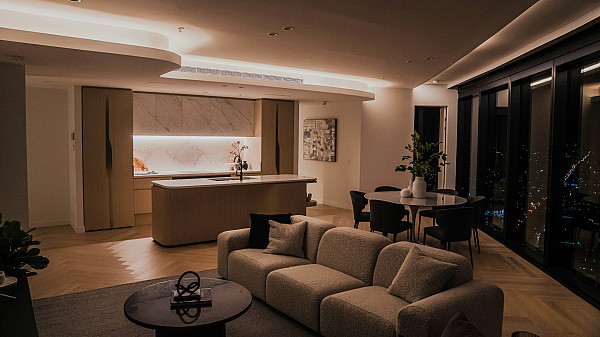
Boutique Apartment vs. Standard Apartment Complex
The practical trade-off comes down to scale, not necessarily the presence or absence of amenities. A standard complex spreads a large amenity package, gym, pool, clubhouse, across hundreds of units and typically offers more staff availability and predictable, standardized layouts, along with the anonymity that comes with a larger number of neighbors and a management office rather than a person. A boutique building trades that scale for character and more direct communication with whoever manages the property; it may still offer a rooftop deck, a small fitness space, or concierge-style service, just scaled down and often more curated rather than absent altogether. Neither is objectively better, it depends on whether you value a full amenity roster and predictability or character, curation, and a more personal management relationship more.
Boutique Apartment vs. Boutique Hotel or Serviced Apartment
These get confused because the word «boutique» carries similar connotations, small-scale, design-forward, in both contexts, but they're different products. A boutique hotel, or a boutique-branded serviced apartment, is generally a short-stay, furnished, hospitality-style product with hotel services built in. A boutique apartment, in the sense this guide covers, is a standard long-term residential lease in a smaller, distinctively designed building, without the hospitality services or short-stay pricing model. If a listing uses «boutique» alongside language about nightly rates or hotel-style services, you're likely looking at the hospitality version rather than a standard long-term rental. Our guide to serviced apartments covers that category directly if that's actually what you're comparing.
Who a Boutique Apartment Suits
It suits someone who values a distinctive space and doesn't need or want a big-complex amenity package to justify the rent, and who's comfortable with a smaller pool of neighbors and a more hands-on, personal relationship with whoever manages the building. It suits someone drawn to the same kind of architectural character that draws people to a loft, in fact the two often overlap, since boutique buildings are frequently smaller conversions with the same kind of distinct history a converted loft has. Our guide to loft vs. studio apartments covers a related distinction if architectural character specifically is what's drawing you to a listing.
What to Check Before Renting a Boutique Apartment
- Ask specifically what's included, since there's no standardized amenity package across boutique buildings, some offer a curated rooftop or lounge, others none at all, so don't assume anything beyond the unit itself without confirming.
- Ask how maintenance requests are handled and by whom. A smaller building with less staff can mean either faster, more personal service or, if the owner or manager isn't especially responsive, slower turnaround than a larger complex with a dedicated maintenance team. Ask directly rather than assuming either way.
- If the building is a conversion of an older structure, ask the same questions you would about a loft: sound insulation between units, and whether the layout has any quirks carried over from the building's original use.
- Confirm who actually owns and manages the property. In a smaller building, this is often a single owner rather than a corporate entity, which changes the day-to-day dynamic and who you're actually dealing with if something needs attention.
For Owners: Managing and Listing a Small Building
If you own a smaller property with a distinctive character, positioning it as a boutique building in your listing sets accurate expectations for the kind of tenant it'll attract: someone specifically looking for that character and personal management style, rather than someone comparing it unfavorably against a large complex's amenity list it was never trying to compete with. You can list your property directly and describe what actually makes it distinctive rather than relying on the word «boutique» alone to do that work.
FAQ
What's the difference between a boutique apartment and a regular apartment?
There's no fixed legal distinction. In practice, «boutique» generally signals a smaller building, a distinct architectural or design character, and more personal, direct management, as opposed to a large complex's standardized units and amenity package.
Do boutique apartment buildings have amenities like a gym or pool?
Often something, but rarely a full package. A large gym or resort-style pool needs more scale than most boutique buildings have, but many still offer a smaller, curated version of shared space: a rooftop lounge, a compact fitness area, or concierge-style service. Some boutique buildings skip shared amenities entirely and lean on the unit and building character instead. It varies enough by property that it's worth asking directly rather than assuming either way.
Is a boutique apartment the same as a boutique hotel?
No. A boutique apartment is a standard long-term residential lease in a smaller, distinctively designed building. A boutique hotel, or a hospitality-branded serviced apartment using similar language, is a short-stay, furnished product with hotel-style services, a different category entirely.
Reading Past the Word «Boutique»
«Boutique» is a useful shorthand for a certain kind of building, small, characterful, personally managed, but it isn't a fixed category with guaranteed features, and listings use it inconsistently enough that it's worth confirming what specifically applies before you decide it's the right fit. Ask about amenities, maintenance, and who actually manages the property, and compare it honestly against what a standard complex offers rather than assuming the word alone tells you everything you need to know.