

Loft vs Studio Apartment: What's Actually Different?
Loft vs studio apartment comes down to one distinction: studio describes a floor plan, loft describes an architectural style — and the two aren't opposites. A studio apartment is one open room for living, sleeping, and cooking, plus a separate bathroom. A loft is a unit built or converted to keep an industrial character — tall ceilings, exposed brick or ductwork, large windows — regardless of whether it has one room or a separate bedroom. A unit can be a studio and a loft at the same time, and plenty of listings labeled «loft» have a separate bedroom that a studio, by definition, doesn't.
What Exactly Is a Loft Apartment?
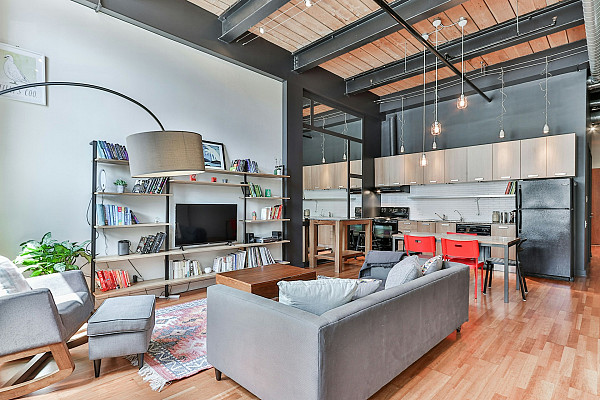
«Loft» originally referred to the upper floor of a warehouse or factory, and in real estate it now describes a unit built or converted to keep that industrial character: ceiling heights well above the 8- to 9-foot range typical of most conventional apartments, exposed structural elements like brick, beams, or ductwork, minimal interior walls, and often oversized windows that were originally designed to light a factory floor, not a bedroom. A loft can be a studio-style single room, or it can have a separate bedroom, sometimes on a raised platform or mezzanine looking down over the main living space. The defining feature is the architecture, not the number of rooms.
What Exactly Is a Studio Apartment?
A studio apartment is defined by its floor plan: one main room that combines the living area, sleeping area, and kitchen, with a separate door only for the bathroom. There's no architectural requirement attached to the term — a studio can have standard 8-foot ceilings and drywall like any conventional apartment, or it can happen to be in a converted building with loft-style features. Square footage varies widely, but studios are generally the smallest standard unit type a building offers, built for efficient use of a compact footprint rather than for a particular aesthetic.
What's the Actual Difference Between a Loft and a Studio?
A studio is a floor plan category — it tells you how many rooms there are and how they're divided. A loft is an architectural style — it tells you about ceiling height, materials, and window size, but nothing about whether there's a separate bedroom. That's the distinction most comparisons miss: they're answering different questions, so a unit doesn't have to be one or the other. A one-bedroom apartment with 14-foot ceilings and exposed brick is a loft with a separate bedroom, not a studio. A small unit with no interior walls in a converted warehouse is both a studio and a loft at once.
What's a «Studio Loft» — Is That a Loft or a Studio?
«Studio loft» is a real, commonly listed unit type, and it means exactly what it sounds like: a single open room, like any studio, but with loft-style architectural features — taller ceilings, exposed materials, larger windows — rather than the standard finishes of a conventional studio. If you see this term in a listing, treat it as a studio floor plan with a loft aesthetic layered on top, not a separate third category. It's worth confirming ceiling height and layout with photos or a walkthrough regardless of the label, since «loft» gets used loosely in marketing even when a unit doesn't have much industrial character left.
Hard Loft vs Soft Loft: What's the Difference?
Within loft apartments specifically, there's a further split worth knowing before you tour anything. A hard loft is a genuine conversion of a former industrial or commercial building — an old factory, warehouse, or mill — where the exposed brick, timber, or ductwork is original to the structure. A soft loft is new construction designed to look like a loft: high ceilings and an open floor plan built intentionally, but without an industrial history behind it. Neither is objectively better — hard lofts tend to have more character and sometimes quirks that come with an older building, like uneven floors or older mechanical systems; soft lofts tend to come with modern amenities and more consistent finishes, since they were built to spec rather than adapted.
Are Lofts More Expensive Than Studio Apartments?
There's no fixed rule, because it depends on what you're actually comparing. A loft in a former industrial building often has more square footage and more distinctive character than a standard studio, which can push the price up for a comparable location — but a «studio loft» with loft-style finishes in a standard-sized unit isn't inherently pricier than any other studio just because of the label. Location and building amenities usually move the price more than the loft-versus-studio distinction does. If you're comparing two specific listings, treat published square footage and ceiling height as more reliable price signals than the category name on the listing itself.
Which One Should You Rent — a Loft or a Studio?
A studio makes sense if you want the most efficient use of a small footprint and don't need — or want to pay for — extra ceiling height or industrial character; conventional studios are also more common outside major cities, which usually means more options to choose from. A loft makes sense if the open, taller-ceilinged feel matters to you, if you work from home and want a space that doesn't feel boxed in, or if you specifically want the character of a converted building. If privacy is a priority, a loft with a separate bedroom or raised sleeping area offers more separation than an all-open studio does, even though neither comes close to the privacy of a true one-bedroom apartment with walls and a door.
Frequently Asked Questions
Is a loft different from a regular apartment?
Yes — «loft» describes the architectural style, not the floor plan, so the comparison isn't limited to studios. A loft can have one room or several bedrooms; what makes it a loft rather than a regular apartment is the industrial character — tall ceilings, exposed brick or ductwork, oversized windows — that a conventional apartment doesn't have, regardless of how many rooms either one contains.
Is a loft bigger than a studio apartment?
Not necessarily — loft describes architecture, not square footage, so a loft can be small and a studio can be large. On average, loft units in converted industrial buildings tend to run larger than standard studios, but that's a tendency, not a rule tied to the definition itself.
Can a loft have a separate bedroom?
Yes. Many lofts include a separate bedroom, sometimes on a raised mezzanine level overlooking the main living space. A loft only becomes a studio if it's laid out as a single open room with no separate bedroom.
Do all lofts have high ceilings?
Not always — the term gets used loosely in marketing, and not every listing labeled «loft» has genuinely tall ceilings or original industrial features. Confirming ceiling height and layout directly, rather than relying on the word «loft» in the listing title, is the reliable way to know what you're actually getting.
Is a studio apartment the same as an efficiency apartment?
The terms are generally used interchangeably in most US markets, both describing a single-room unit with a separate bathroom — though some buildings use «efficiency» specifically for the smallest, most stripped-down version of that layout. Outside the US, the same floor plan is more commonly called a «studio flat,» and in the UK specifically, «bedsit» sometimes describes a similar single-room setup, though that term can also imply shared rather than private facilities.
The two terms answer different questions, and that's the whole reason the comparison feels confusing in the first place — one describes how a space is divided, the other describes what it looks like. Once you separate those two questions, «loft vs studio» stops being a real choice between two categories and turns into two things you check independently: how many rooms does this unit actually have, and does it have the ceiling height and industrial character you're picturing when you hear the word loft.