

Are Studio Apartments Cheaper Than Regular Apartments?
Studio apartments are usually cheaper in total monthly rent than a comparable regular apartment in the same building, simply because they're smaller. But cheaper overall isn't the same as cheaper per square foot — studios often cost more per square foot than larger units, because a kitchen, a bathroom, and an entry cost roughly the same to build and maintain whether the unit around them is 400 square feet or 900.
Are Studio Apartments Actually Cheaper Than Regular Apartments?
In total rent, generally yes — a studio's smaller footprint means a lower monthly number on the listing compared to a one-bedroom or larger unit in the same building or neighborhood. That's the comparison most people are actually asking about, and it holds up as a reasonable rule of thumb across most markets. Where it gets less straightforward is cost efficiency: because certain fixed costs — plumbing, electrical hookups, appliances, the entry door and its lock — don't scale down with square footage, a landlord's cost to build and maintain a studio isn't proportionally smaller than for a larger unit, and that shows up as a higher price per square foot even when the total rent is lower.
What's the Actual Difference Between a Studio and a «Regular» Apartment?
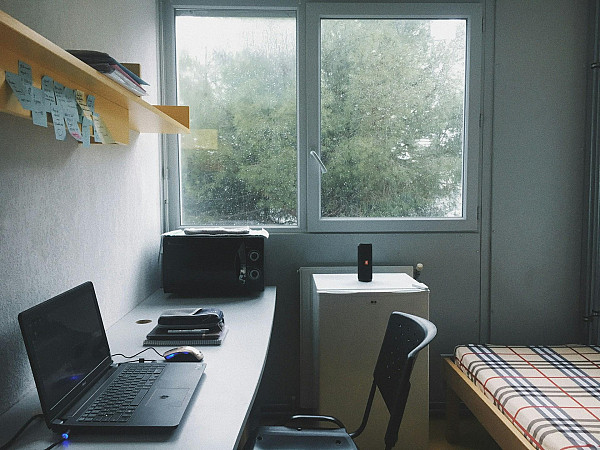
A studio is one open room combining living, sleeping, and cooking space, with a separate door only for the bathroom. A «regular» apartment, in casual usage, generally means anything with at least one separate bedroom — a one-bedroom, two-bedroom, or larger unit with walls dividing the living space from where you sleep. The core trade-off is privacy and separation of space versus overall cost: a studio gives up a separate bedroom in exchange for a smaller footprint and, usually, a lower total rent.
Why Isn't a Studio Always the Cheapest Option?
Several costs don't shrink just because the unit does. Security deposits are sometimes set as a flat amount or a percentage of rent rather than scaling with square footage, so the gap can be smaller than the rent difference suggests. Application fees, renters insurance, and parking — where it's billed separately — typically cost the same regardless of unit size. And because studios tend to be in higher demand from single renters and students in many markets, competitive pricing pressure can narrow the gap between a studio and a small one-bedroom further than the raw square footage difference would predict.
What About Alcove Studios and Junior Apartments?
Some units fall between a true studio and a full one-bedroom, and they're priced accordingly. An alcove studio has a partial nook — separated from the main room by a short wall, a half-wall, or a hallway — that's typically used for the bed, giving a bit more visual and physical separation than an open studio without actually being a separate room with its own door.
In New York City specifically, where this terminology is most established — tied largely to postwar buildings from the 1950s and 60s — two related terms get confused constantly, and they describe different tiers, not the same thing. A junior one (Jr-1), sometimes marketed as a «convertible studio» or a «flex,» is a studio with a nook large enough to wall off into something resembling a bedroom, though it won't have a window or meet the legal requirements for a true bedroom. A junior four (Jr-4) is a step up from that, not another name for the same thing: it's a real one-bedroom apartment — with an actual bedroom that has a window and meets code — plus an additional bonus room, often created the same way with a temporary partition. Treating these as interchangeable is a common mistake: a Jr-4 already comes with a real bedroom, while a Jr-1 doesn't, no matter how the nook is walled off.
Neither a Jr-1 nor an alcove studio is a legal one-bedroom the way a unit with a permanent, code-compliant bedroom wall is, and landlords will typically still list them as studios in official terms even while marketing the extra separation as a selling point. That's exactly why they tend to rent for more than a plain, fully open studio in the same building — you're paying for the layout flexibility, not for square footage you don't actually have. If a listing uses any of these terms, ask directly whether a partition is included, permitted, or something you'd need to add yourself, and whether the «bedroom» has a window — that detail is rarely made explicit in photos.
Are Luxury Apartments Different From Regular Apartments in the Same Way?
Yes, but the driver is different. «Luxury» describes the building and its amenities — a doorman, a gym, a pool, higher-end finishes, on-site staff — rather than the floor plan, so a luxury building can charge a premium on a studio that exceeds what a non-luxury one-bedroom costs elsewhere in the same city. This is where the «studio is cheaper» rule of thumb breaks down completely: a studio in a luxury building is being priced for the amenities and the address, not primarily for its square footage, and comparing it against a regular studio elsewhere tells you more about the building tier than about unit type.
When Does a Regular Apartment Make More Financial Sense Than a Studio?
If you're splitting rent with a roommate, a one-bedroom with a real dividing wall is often cheaper per person than two people sharing a studio's single room would be tolerable for, even though the studio's total rent is lower. If you work from home and need a space that closes off from where you sleep, the marginal cost of a one-bedroom over a studio in the same building is sometimes small enough that the extra room is worth it purely on a per-square-foot basis. And in markets where studios are scarce and in high demand, a nearby one-bedroom can occasionally list for a comparable price simply because there's less competition for it.
Frequently Asked Questions
What's the difference between an alcove studio and a regular studio?
An alcove studio has a partially separated nook, usually for the bed, created by a short wall or hallway — a regular (or «true») studio is one fully open room with no such division. Neither has a separate bedroom with its own door.
Is a junior four the same as a junior one?
No — they're different tiers, not interchangeable terms. A junior one is a studio with a nook that can be walled off but has no real bedroom, while a junior four is an actual one-bedroom apartment with a real, code-compliant bedroom plus an additional bonus room.
Are studio apartments cheaper than one-bedroom apartments?
Usually, in total monthly rent, since they're smaller — but the price per square foot is often higher for a studio, so the savings are smaller than the size difference alone would suggest.
Why do studio apartments cost more per square foot?
Because certain costs — plumbing, electrical, appliances, the entry itself — are roughly fixed regardless of unit size, so a smaller unit spreads those same fixed costs over less square footage.
Is a luxury studio cheaper than a regular one-bedroom apartment?
Not necessarily, and often the opposite — a luxury building's amenities and finishes can push a studio's rent above what a non-luxury one-bedroom costs elsewhere in the same market.
Is it cheaper to split a one-bedroom with a roommate than to each rent a studio?
Often yes, on a per-person basis, since splitting one larger unit's rent two ways can come out lower per person than each renter separately paying for their own studio.
The honest version of «which one is cheaper» depends on which number you're actually comparing — total rent, cost per square foot, or cost per person if you're splitting it. A studio wins on the first number most of the time; it doesn't automatically win on the other two, and that's usually where people end up surprised after they've already signed.
You can compare current listings directly to see how this plays out in practice — browse long-term apartments for rent across the US and check the price per square foot on a studio against a nearby one-bedroom before assuming either one is the better deal.